

All About Iran
The questions everyone is asking about Iran—and the women who had the answers all along.

Happy birthday Nina! Happy Holi! Happy Women’s Day? There’s not much to be happy about. Give a shout if you’re in NYC this coming week for CSW. I’ll be at most of the Feminist Foreign Policy Collaborative events.
There’s a lot going on… I’ve got the roundup up top, but you can click here to go directly to the All About Iran section, which looks at various scenarios, and how the US is now going to Ukraine for help to counter Iranian drones…..
This Week in the World.....

On my radar...
You wouldn’t know it from the headlines, but there was actually news other than Iran this week.
Coming attraction: Cuba. Trump said that he and his secretary of state would turn their attention to Cuba, which he said “needs help.” Cubans suffered through major blackouts this week. This is a direct result of the cutoff of oil supplies. As much as Trump and Marco Rubio want to topple the Castro regime, so too do Cubans, writes Whitney Eulich. (Christian Science Monitor)
Nepal held elections on Thursday—the first since its government fell in Gen Z-led protests. We won’t know the results, at the earliest, until the weekend. On the ballot was Belen, a 35-year-old rapper who has been serving as the mayor of Katmandu, Nepal’s capital. (Sound like anyone you know?) He leads the National Independent Party, founded in 2022. Belen went up against former prime minister KP Sharma Oli—the prime minister that Gen Z ousted. Hannah Ellis-Petersen and Gaurav Pokharel report. (The Guardian)
Annnndddd….if you thought Venezuela and Iran were occupying the US military’s time…the US and Ecuador have teamed up on a military operation to combat criminal gangs, or what the Trump White House calls, “designated terrorist organizations.” It’s all a part of Trump’s war on drugs in South America, writes Jordana Timerman (Latin America Daily Brief)
In France, Emmanuel Macron announced a new policy of “advance deterrence,” which would deploy nuclear-capable fighters in Europe, extending a nuclear umbrella over Europe, writes Molly O’Neal (Responsible Statecraft)
Trump and his tough guy foreign policy have certainly pushed more countries towards nuclear weapons.
Now onto Iran….
The next section is entirely devoted to Iran. Here, I’m sharing a few links worth your time….
The US and Israel struck Iran in order to stop Iran’s nuclear capabilities. Except, while the ambition was there, the capability to produce a weapon was not, writes Nicole Grajewski. The June strikes that damaged the facilities at Fordow, Natanz, and Isfahan were damaged. Dozens of scientists and engineers who carried knowledge of the program were killed. “Iran is now paying the price for a weapon it was never willing to actually build.” (Bulletin of Atomic Scientists)
My question is whether Israeli intelligence knew this but refrained from revealing it. I have more on Israel’s—really Netanyahu’s—aims in attacking Iran below.
A number of Iranians are calling for the last Shah’s son, who has lived in the US for the past four decades, to lead the country in the event of a regime collapse. Yet, with the Shah’s checkered history, which also includes corruption and repression, what Iran needs to do is reconcile with its past and break the destructive cycle that has prevented democratic rule from taking hold, writes Azadeh Moaveni. (NYT)
While we’re all glued to our devices, following the developments in Iran, it’s important to point out that Iranians aren’t. Holly Dagres, author of The Iranist Substack, points out that the Islamic regime shut down the Internet inside the country, leaving many people with little information about current hostilities. (Washington Institute)
Trump and Netanyahu want to rid Iran of its current Islamic rulers in Tehran. Burcu Özçelık writes that regime collapse might actually come not from the US and Israel but ethnic minorities scattered throughout the country. (FT)
What did I miss this week? Tell me.
Opportunities
Next Thursday, March 12, let’s join Lourdes Martin for a book club discussion on The Undocumented Americans by Karla Cornejo Villavicencio. Here are the details.
The American Society of International Law is hosting an online roundtable on peace law, policy, and practice, on Friday, March 20 at 12pm, not sure what time zone.
The Elders is searching for a consultant to work on an international campaign on the rule of law.
Please let me know if your organization has an opportunity—a job posting, an event, a fellowship—you’d like to share.
All About Iran
There are a lot of moving parts on the US and Israeli attack on Iran. A number of you reached out with specific questions. So, in lieu of a regular column, I’ve opted for a Q&A this week, to help navigate what is not only a fast-moving but an overwhelming situation.
How long will this war last?
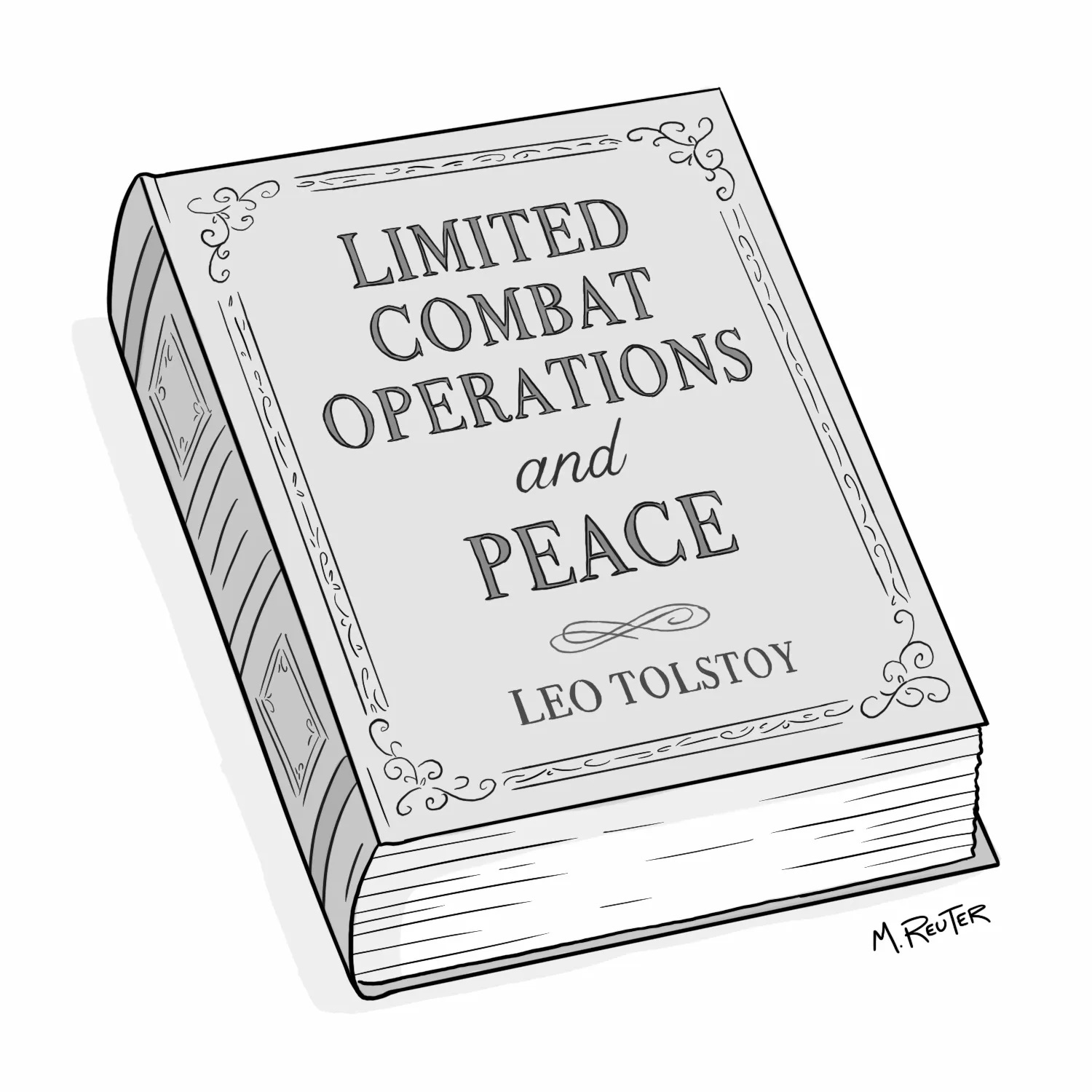
Trump may have envisioned a limited operation, Iran is not going down without a fight.
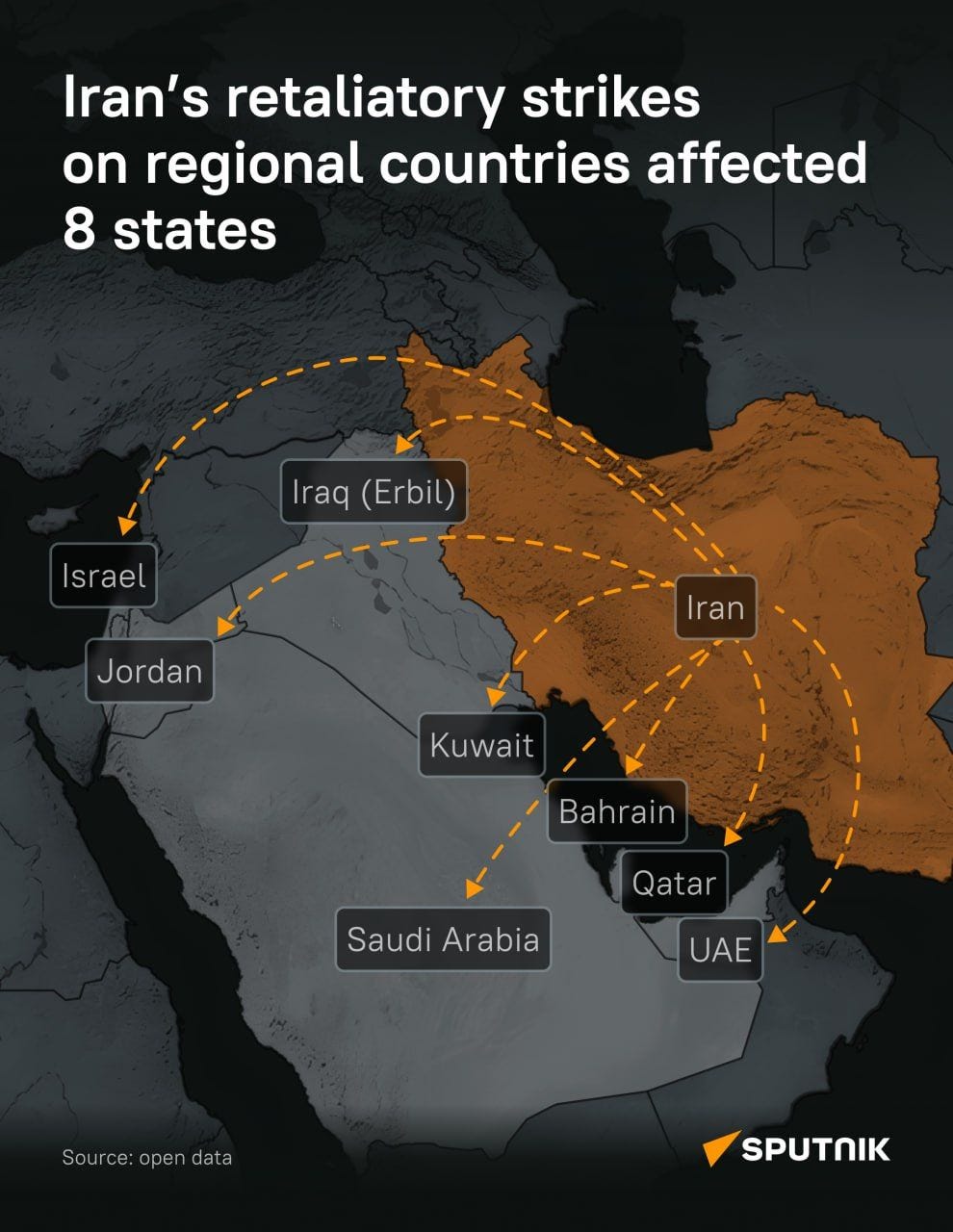
In June, after attacks on its nuclear facilities, Iran warned Qatar ahead of a retaliatory strike on the US base there—leaving enough time for Americans to evacuate. This time, it’s not holding back. It launched strikes across the Gulf, even hitting Oman, which had been brokering peace talks between it and the US. Here, Iran is hoping that this will make Gulf capitals pressure Trump to stand down.
Iran has launched missiles on: Azerbaijan, Bahrain, Cyprus (aimed at a British base), Israel, Jordan, Kuwait, Oman, Qatar, Saudi Arabia, and the UAE. In Lebanon, Iran’s proxy partner, Hezbollah, launched an attack on Israel, perhaps with the mindset of divide and conquer.
And now there are reports that Israel designed a plan to arm Kurdish forces, located in Iraq, for a ground offensive. CNN broke the story that the CIA had already been working with Iranian Kurds, who are about 10 percent of Iran’s population. This would essentially be turning a war with Iran into a war inside Iran—civil war.
Ezgi Başaran, who is smart on all things Kurds, Syria, and Turkey, likens this development to Syria’s civil war. “Because it is difficult to see how this path that they are taking could produce a stable or democratic Iran.” (Angle, Anchor, and Voice)
What’s the endgame?
For Iran the endgame is very simple: the survival of the Islamic regime. I’m not going to cover the whole debate on regime change here, primarily because it’s largely moot. Ayatollah Ali Khamenei, Iran’s ruler for 37 years, is dead. Iran will have a new leader. Early reports are that it would be Khamenei’s son, Mojtaba. But Polymarket has gone sour on him. While Trump didn’t rule out deploying troops in Iran, he doesn’t seem like he has the appetite, much less the patience—or attention span—to occupy Iran like Bush did with Iraq and Afghanistan and force a full-scale regime change. Certainly, it’s possible, but I’m not betting on it.
For Israel the endgame is wrapped up in Benjamin Netanyahu’s personal survival. The Israeli prime minister has faced fraud, bribery and corruption charges in Israel. He faces elections in October—or this spring if the Israeli parliament fails to pass a budget. As Tal Shalev notes, if the parliament fails to pass a budget by the end of March, parliament will dissolve and elections must be called. Netanyahu’s gamble is that if he shifts the conversation from his malfeasance to Iran, he can hang on to power. Netanyahu is wildly unpopular, even as a majority of Israelis support the country’s war on Iran. The Economist notes that only 38 percent of Israelis trust the prime minister.
And they have good reason. Along with the genocidal war he’s conducted in Gaza, Netanyahu’s attack on Iran has made his country less safe for its citizens.
For Trump the endgame is unclear, since his war aims are all over the place; he gave an array of reasons to justify the use of force. That included preventing Iran from having a nuclear weapon to regime change to getting back at Iran for an assassination attempt. Frida Ghitis lays out the list, and makes the point that none of it included bringing freedom or democracy to Iranians. She notes “Trump may fantasize about a situation similar to Venezuela’s, where a pliable new leader helms the old regime.” (Insight)
Axios reports that Trump has said he must “be involved in the appointment” of Iran’s next leader, “like with Delcy [Rodriguez] in Venezuela.”
To that, he’ll need to get around Iran’s Revolutionary Guard Corps (IRGC), a multi-layer body of 150,000 personnel. Iran’s foreign minister said that it was no longer under a single command, but a “mosaic defense” posture. Rather than taking orders from a central command structure, local units are empowered to carry on with the war, as each sees fit. 👀 😳
What do other countries think of this?
The Europeans are in a bind. They want to be against this, but can’t defend Ukraine without the US. Hence, their mealy mouth support. Spain stands out in the crowd. Its leader, Pedro Sánchez, has criticized the attack and refused to allow the US military to use its bases for the war. Shoutout to my father’s favorite soccer team, Eskişehir Spor, who chanted Olé, in support. Yes, I’m crying.
In Russia, Vladimir Putin called the US-Israeli attack an “unprovoked act of armed aggression against a sovereign and independent UN member state.” Irony, not dead. Russia is an Iran ally, but isn’t coming to the country’s rescue. That’s not only because it has its hands full in Ukraine. The reality is the US attack benefits Russia. As oil prices go up AND as supplies are cut off from the Strait of Hormuz, which is closed, Russian crude will be in demand, namely by China. That will enable him to continue to bankroll the war on Ukraine.
For Ukraine, the attack on Iran is not great. The US is using jets and equipment in the Middle East may “starve” Ukraine of “American-made weapons it needs to resist Russian missile attacks,” as Veronika Melkozerova, Esther Webber, Zoya Sheftalovich, and Tim Ross write. (Politico)
BUT, in a plot twist, the US is actually asking Ukraine for help in defending against the Iranian drones, as Hanna Arhirova and Illia Novikov report. (AP)
So much for your billion dollar Tomahawks.
China is another beneficiary of Trump’s war on Iran. While it may take a hit on energy supplies and shipping goods, “Beijing doesn’t see regime change in Iran as a worst-case scenario,” writes Yun Sun. From corruption to how it’s handled the US and Israel, China had lost faith in the Islamic regime. (Foreign Affairs)
Speaking of worst-case scenarios, how does this end?
Best case scenario: The war ends quickly, either because Trump decides that the costs are too high—in American lives, but more likely because gas prices and inflation rises and the stock market tanks— or Iran’s Islamic rulers lay down their arms and agree to give up their pursuit of anything nuclear. There’s more of a chance that I’ll be crowned Miss America before that happens.
More realistic scenario: Iran’s military might throw the mullahs under the bus and take over. They’ll probably let up on how women dress, but they’re unlikely to give up repression—or the pursuit of a nuclear weapon. After what happened in the last week, you can guarantee that whatever government comes to power in Iran, it will work to get a nuclear weapon.
Worst case scenario: The war drags on and spreads. More lives are lost. Seeing the backpacks of the children killed in the bombing of the school in Minab broke my heart. As mentioned last Sunday, oil prices will rise and the global economy will take a hit.
On the eve of International Women’s Day, it’s worth naming what has been too easy to ignore: Iran’s women have been telling the world about the brutality and corruption of the Islamic regime. After Mahsa Amini was killed in 2022, women—and men alongside them—poured into the streets under a simple, radical slogan: Woman, Life, Freedom. The NYT editorial board rightly saw it as a crack, an opportunity to support a democratic movement in Iran, noting that American support should not end with messages of solidarity; it can do more to back the protesters through communication tools and civic engagement. Because the forces that change countries aren’t weapons, but people. —Elmira
