
It Ain't Over
The Greenland crisis has been averted—for the moment. But the US is not done throwing around its weight.

Happy birthday Frank. Alevcim, nice mutlu yillara.
Congrats to Robin Hessman, she is the Executive Producer of the documentary Mr. Nobody Against Putin, which was nominated for an Oscar!
Another book giveaway! I’ll have another next week too. Oh, I’m also on TikTok. I know, I need to step it up. It’s a work in progress.
Please love this post by hitting 🖤 above —and, please, share with others. If you ❤️ the newsletter, please become a paid subscriber.
If this is only January 23, I’m afraid of what the rest of the year will look like. 😵💫
Last Saturday, Trump posted that starting February 1 he would levy a 10 percent tariff on Denmark, Norway, Sweden, France, Germany, the UK, the Netherlands, and Finland unless a “Deal is reached for the Complete and Total purchase of Greenland.” That number would go up to 25 percent on June 1. Greenland, he points out, is necessary for America’s national security. That’s always been true, but more so now given that the Arctic is melting, which has opened up shipping routes. He noted that previous presidents have tried, but “Denmark has always refused.”
Indeed, Harry Truman offered Denmark $100 million in gold and rights to Alaskan oil for what is the largest island in the world. What the US ended up with is an agreement, signed in 1951, that it could build, operate, and maintain military bases. This is what might have calmed things down—for the moment.
Canadian Prime Minister Mark Carney was not willing to wait to see how things unfolded. At the World Economic Forum in Davos, he upstaged Trump with a speech in which he called the moment we’re in “a rupture, not a transition.” Middle powers, he argued, can no longer “wait around for a world we wish to be” but to “actively take on the world as it is.” He urged others to recalibrate in the face of crude power grabs.
He was right. But not for the reasons many assume.
For the past week, many have lamented the death of the US-led liberal world order. Certainly there is no allegiance to rules, much less norms or values anymore. Yet, the US is not done. At least, Trump isn’t. And there’s no ideology behind it.
There is a temptation to reach for labels—to call Trump a fascist, to box his behavior within familiar historical frameworks. Except, there’s no precedent for this. Trumpism is not a doctrine. People rightly describe Trump as transactional. But this is not transaction in the service of a coherent strategy or long-term goal. The transaction itself is the objective: dominance, leverage, and personal validation. What drives Trump is a volatile mix of vanity, insecurity, and performance—and because of that, Trumpism is perpetually in flux. That incoherence does not make it less dangerous. It makes it harder to confront, which is the point that Elizabeth Saunders and Daniel Drezner make in Foreign Affairs.
And yet, Trump’s incoherence creates a dilemma not only for Washington’s allies, but for its rivals. When there is no ideology to counter and no strategy to deter, restraint itself becomes a strategic choice. That is what makes the next silence so telling.
Hello, China? Beijing has largely been silent. It did push back on Trump’s claim that China wants influence over Greenland. Perhaps that reflects confidence rather than caution. Just before Carney landed in Davos, he wrapped up a trip to China, where Canada and China signed a trade deal that included the purchase of Chinese electric vehicles. While Trump was making demands, Xi Jinping was doing business.
Business is exactly what got Trump to stand down from his Greenland temper tantrum. Stocks plummeted the day before the US president landed in Davos—and rallied after he made it clear that he would not use force to take the island. He then worked out “a framework” with Europe so that Greenland remains Danish and the US gets bolstered military presence.
Europe avoided a crisis this time—but at the cost of learning just how exposed it has become.
Europe is already stretched thin by Russia’s ongoing war in Ukraine. It does not have the capacity—political, military, or economic—to confront Moscow while simultaneously managing a hostile and transactional Washington. The continent is being pulled apart from both ends.
I argued in Foreign Affairs last week that Bosnia sits on one of the most fragile fault lines in Europe today, and that the Dayton Peace Accords require renewed investment and attention. That warning now feels even more urgent. In a world where the United States no longer sees itself as the guarantor of stability—and where Europe is increasingly consumed by its own crises—fragile settlements become expendable.
And Europe is not alone. In Africa, Sudan’s civil war rages and there are signs of conflict brewing between Ethiopia and Eritrea as well as Somalia and Somaliland. Saudi Arabia and the UAE—long treated as a unified Gulf front—are increasingly competitors, not collaborators. They’re locked in an economic and diplomatic rivalry—in Sudan and across the region. It is not explosive, but it is destabilizing in a world where no external power is enforcing coherence.
This is the uncomfortable truth of 2026: the rules-based international order is breaking down, but American dominance remains firmly intact. The United States still sits atop the global hierarchy. What has changed is how it wields that power—and the glaring lack of restraints to tame it. —Elmira
📚 Interrupt Your Bookshelf! 📚
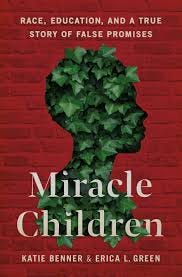
Enter the drawing to win a copy of Miracle Children: Race, Education, and a True Story of False Promises. Submissions close on Monday, January 26, 9:00am ET. Only active subscribers to the newsletter are eligible. Also, for this drawing, you must be based in the continental US.
Elsewhere in the World.....

On our radar...
Carney at Davos
He called Trump’s demand for Greenland a “rupture” of the rules-based world order and called for “middle powers” to band together. It not only won Canada’s prime minister, Mark Carney, a standing ovation, but worldwide plaudits for saying what needed to be said: America has become a bully. But does Canada, along with Europe have what it takes to stand up to Trump’s America? Jordan Leichnitz says it will determine whether Carney’s remarks are a turning point, or bluster. (IPS Journal)
Maybe it was the AI image of a US flag draped over Canada that emboldened Carney. Paula Newton on how Canada is positioning itself to be the next target on Trump’s wish list. (CNN)
Greenland
Trump’s Greenland obsession is absurd, but also an opportunity for Europe to step up its defense, write Emma Ashford and Nevada Joan Lee. (Stimson Center)
Europe has leverage over Greenland, argue Jana Kobzova, Jana Puglierin, Katrine Westgaard, and Vessela Tcherneva. They outline 10 ways, including talk to Americans. Imagine that. (ECFR)
Venezuela should have been a warning, writes Heather Hurlburt. “Allies, especially but not only Atlantic ones, must understand that on economic and cultural issues they cannot carve out distance from US domestic policy.” (Chatham House)
Board of Peace
Also at Davos this week, Trump unveiled his “Board of Peace”—a body of world leaders originally intended to oversee the Gaza ceasefire plan. Fifty invites have been sent out and membership will cost $1 billion. Julia Frankel lists those who have accepted, including Jordan, Qatar, Saudi Arabia, Turkey, and UAE (countries that actually matter to Gaza’s peace) and those still considering the invite, including, um, Russia. (AP)
Yes, including Russia. As Frida Ghittis points out, it is less a peace-building and reconstruction effort and more a power grab that takes a swipe at the UN and global governance in general—all under Trump’s authority. (WPR)
FYI, no Palestinian has been named.
Free Trade Lives!
This is actually significant news. The EU and the South American trading bloc Mercosur have landed on a free trade agreement. (Though the EU Parliament voted on a razor thin margin to send it for a “judicial review” - there’s more in the next piece.) Khalea Robertson lays out what’s in it—and what’s next. (AS/COA)
As mentioned above, though the EU Commission brokered a trade agreement with Mercosur, EU’s parliament has gotten cold feet. The Germans are having none of it. The country’s leader, Friedrich Merz, has called on Brussels to implement it anyway. Camille Gijs and Max Griera have more. (Politico)
Iran
The Human Rights Activists News Agency says that 4500 people died during protests that ripped through Iran. Cora Engelbrecht captures the accounts from Mashad, the country’s second most populous city. (New Yorker)
Venezuela
How long ago was it that we kidnapped Venezuelan president, Nicolás Maduro?
Susan Segal looks at the silver lining of Maduro’s decapitation. She says that while the “old regime is still in place and (faces) a difficult road ahead, Venezuela may be facing a generational opportunity.” It will depend on the restoration of the rule of law and basic governance. (Americas Quarterly)
The US
Isn’t it remarkable that the one-year anniversary of Trump’s second term doesn’t even rank as top news….
Trump’s leadership does. Elizabeth Saunders and Daniel Drezner say that he has moved the US and the world from a rules-based international order to a more anarchic environment. (Foreign Affairs)
Welcome to the jungle.
Africa
So, those Ugandan elections last Thursday. Incumbent President Yoweri Museveni, who is 81 and has ruled since 1986, seems to have won, with 72 percent of the vote? Maybe that’s what happens when you shut off the Internet. Opposition leader, Bobi Wine, is calling fraud—and is also being held on house arrest. Anita Nkonge, Danian Zane, and Lucy Fleming report. (BBC)
In Lagos, Nigeria’s largest city, residents of a 19th century fishing community known as the “Venice of Nigeria” have been left homeless after the government evicted them for “safety reasons.” Dionne Searcy notes that 100,000 have been left homeless and digs in deeper. (NYT)
Asia
Tax those condoms! China’s birth rate fell to a record low in 2025, with only 7.92 babies born. That’s down from previous years which have come in at about 9 and 10 million. Luna Sun has some of the details, though this piece doesn’t say that the Chinese Communist Party will now tax condoms. (South China Morning Post)
Japan goes back to the polls on February 8. The country’s new prime minister, Sanae Takaichi, just in the post for three months, has called snap elections. Her poll numbers are high, but her party’s ruling margin in Japan’s parliament is thin—just one seat. She’s gambling that her push back on China and popularity will land her strong backing and a larger majority. Will it pay off? Yuki Tatsumi discusses. (The Diplomat)
Middle East
In Syria, Ahmet Al Sharaa’s government has taken over territory in northeastern Syria; territory that the Kurds have long controlled. That has been a blow to the Syrian Kurdish forces (aka SDF), whom the US had previously allied with—but clearly did not support as this happened. All of it has reduced Kurdish autonomy and leverage and may possibly be good for neighboring Turkey, writes Ezgi Başaran. (Angle, Anchor, and Voice)
There’s another war that Israel is waging, in the West Bank, that’s not making headlines, writes Mariam Barghouti. (Al Jazeera)
Opportunities
Sorry folks, I got nothing here—it was a busy week!
Editorial Team
Elmira Bayrasli - Editor-in-Chief