

NATO without America: The Ankara Summit
Europeans are spending more on defense and turning to the Turks, as the US pulls back from the 77 year old alliance. Can the Ankara Summit produce a NATO 3.0 and a win for Ukraine?

Here’s my first paywalled post. And my pitch for you to become a paid subscriber.
As a paid subscriber, you’ll get:
The ability to comment on posts
Access to expert conversations—I’ve hosted a few “live” discussions with experts. Moving forward, I’ll make this a regular feature moving forward. Paid subscribers will receive advance notice and will be able to submit questions ahead of time—if they’re not able to participate live!
Monthly office hours—I’ll host regular office hours for paid subscribers on op-ed writing, pitching, and careers, on a Monday around lunchtime in NYC. Come with your questions about a piece or an idea. Or come with questions about careers or something I wrote or something you read.
Discounted access to op-ed writing workshops—I’m bringing back op-ed writing workshops. Those workshops helped participants publish in outlets including The New York Times, The Washington Post, Foreign Policy, Foreign Affairs, Project Syndicate, The New York Review of Books, and The New Republic.
Discounted access to an installment of my Feminist Foreign Policy course—I will break this down into a digestible 4-week format in several iterations this fall.
For annual paid subscribers at $80:
You’ll receive a reduced rate for the op-ed writing workshop.
For Interruptrr Champions at $150:
Your subscription amount can be applied as a discount toward either the op-ed writing workshop or the Feminist Foreign Policy course. “Interruptrr Champions” will also get a 30-minute writing consultation.—Elmira

The big news today is the NATO Summit in Ankara, Turkey.
Here’s an interesting fact: NATO was founded in 1949, but has only held 37 summits. From its founding to the end of the Cold War in 1991, there were only 10. Since Russia’s full-scale of Ukraine in 2022, it’s become an annual affair.
This year, Turkey, the alliance’s second largest military member after the US, plays host. The last time it did so was in Istanbul in 2004. Two decades later, leaders from the alliance’s 32 member states—and representatives from other countries, including South Korea, Japan, Australia, and the Gulf, will gather in Ankara for what will hopefully be an uneventful meeting—or, at least, one that Donald Trump doesn’t derail.
Once upon a time, NATO’s purpose was simple enough to explain in a sentence: contain the Soviet Union. Today, Russia is again the obvious threat (in Europe). But the alliance is also struggling to manage the American president, who has railed against NATO, courted Russia’s Vladimir Putin, and threatened to annex Greenland. And he’s not happy that the alliance did not help him out in Iran.
NATO 3.0
Trump has not hid his disdain for the North Atlantic alliance. It’s a sentiment that actually dates back to September 1987 when he took out a full-page ad in the New York Times noting that other countries were “taking advantage” of the US in terms of defense. While it mainly focuses on Japan, it says that the US should stop paying to defend wealthy allies that could defend themselves.
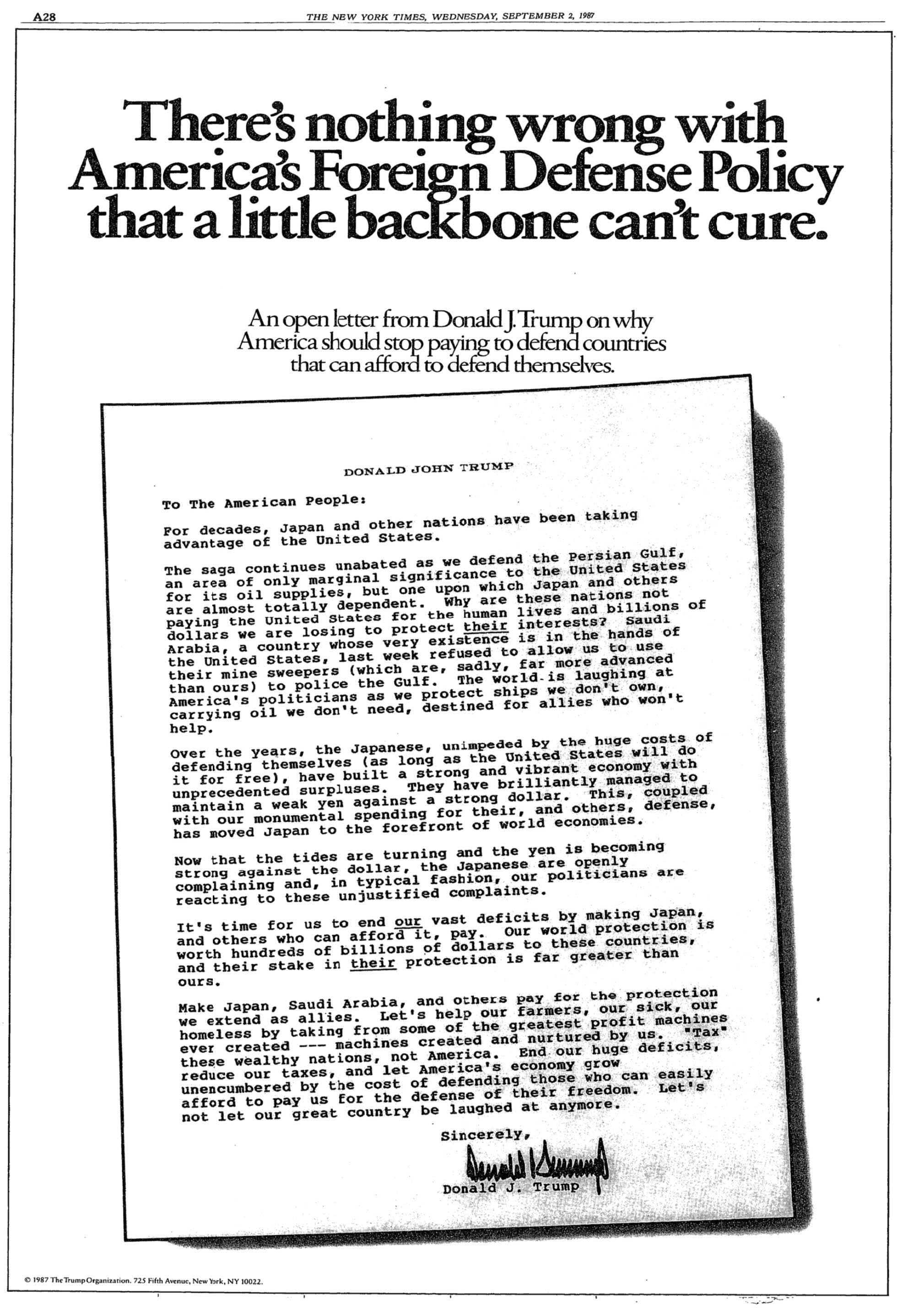
In 2017, after he was elected US president, Trump turned that complaint into policy. He harangued NATO members to increase their share in defense spending. That’s something Barack Obama had proposed in 2014, following Russia’s invasion of Crimea. But it was Trump who held their feet to the fire.
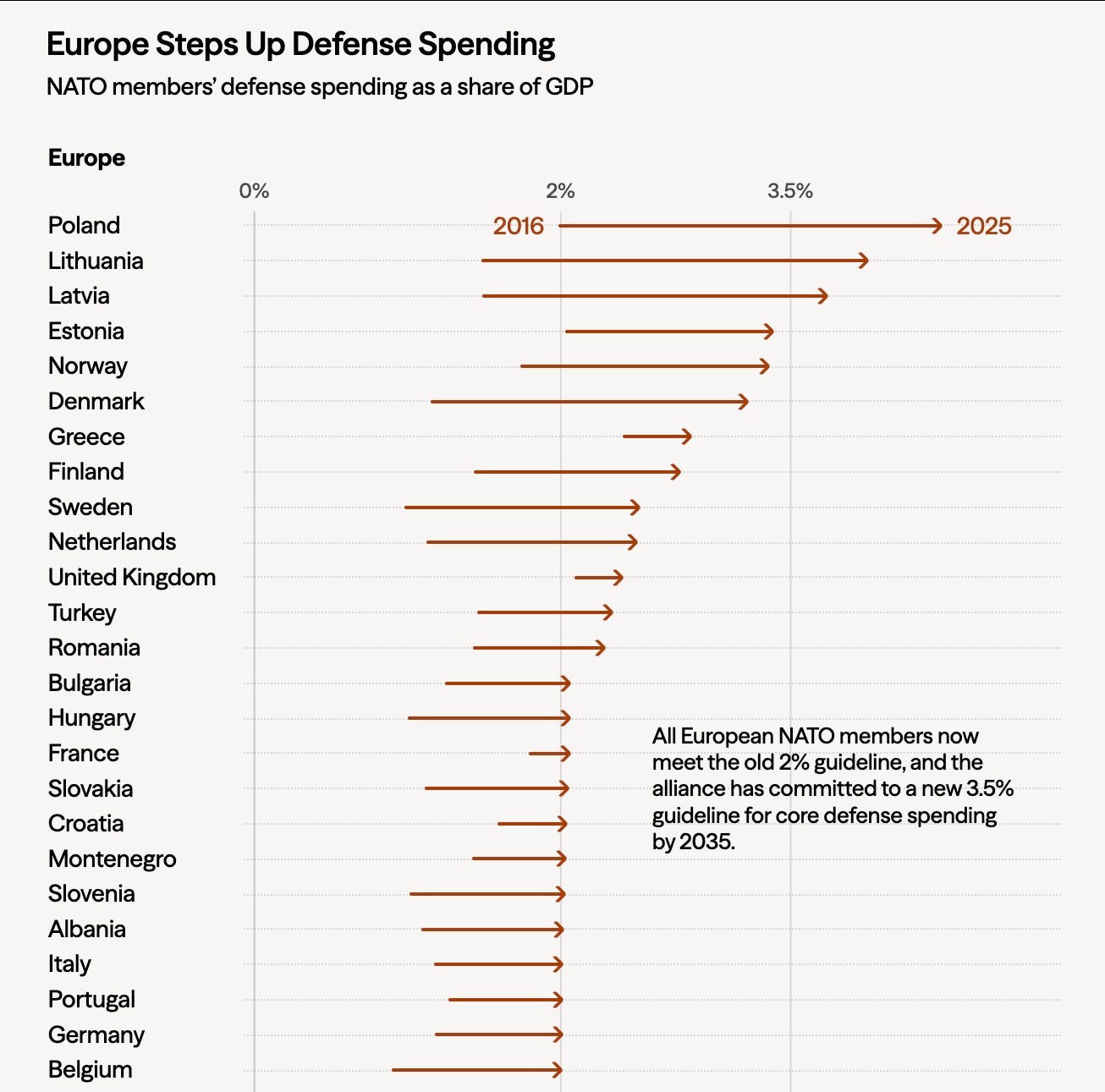
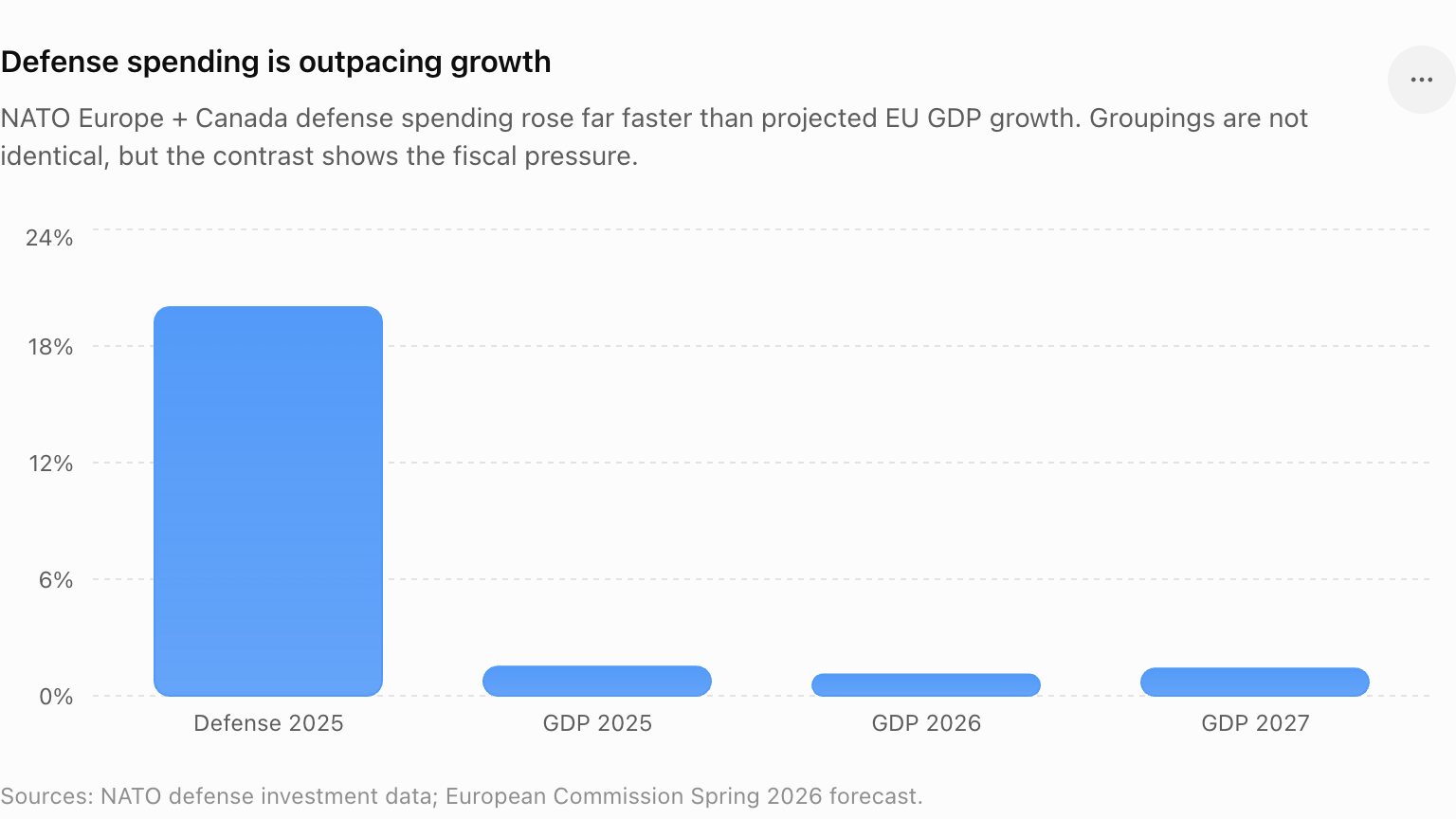
Last year, NATO members agreed to increase spending to 5 percent of GDP by 2035—3.5 percent on defense and 1.5 percent on broader security needs such as cyber preparedness. They agreed to this increase, even as their economies are not growing at the same pace—which is a cause of tension in the alliance but also domestically. Most Eastern European countries, who are closer to Russia, are on target for that, with Poland spending 5 percent of GDP in a few years and the Baltic countries not far behind. Those countries can sell the cost and the cuts in other places at home. The further west you go away from Moscow, defense spending declines as voters push back on proposed cuts in other areas.
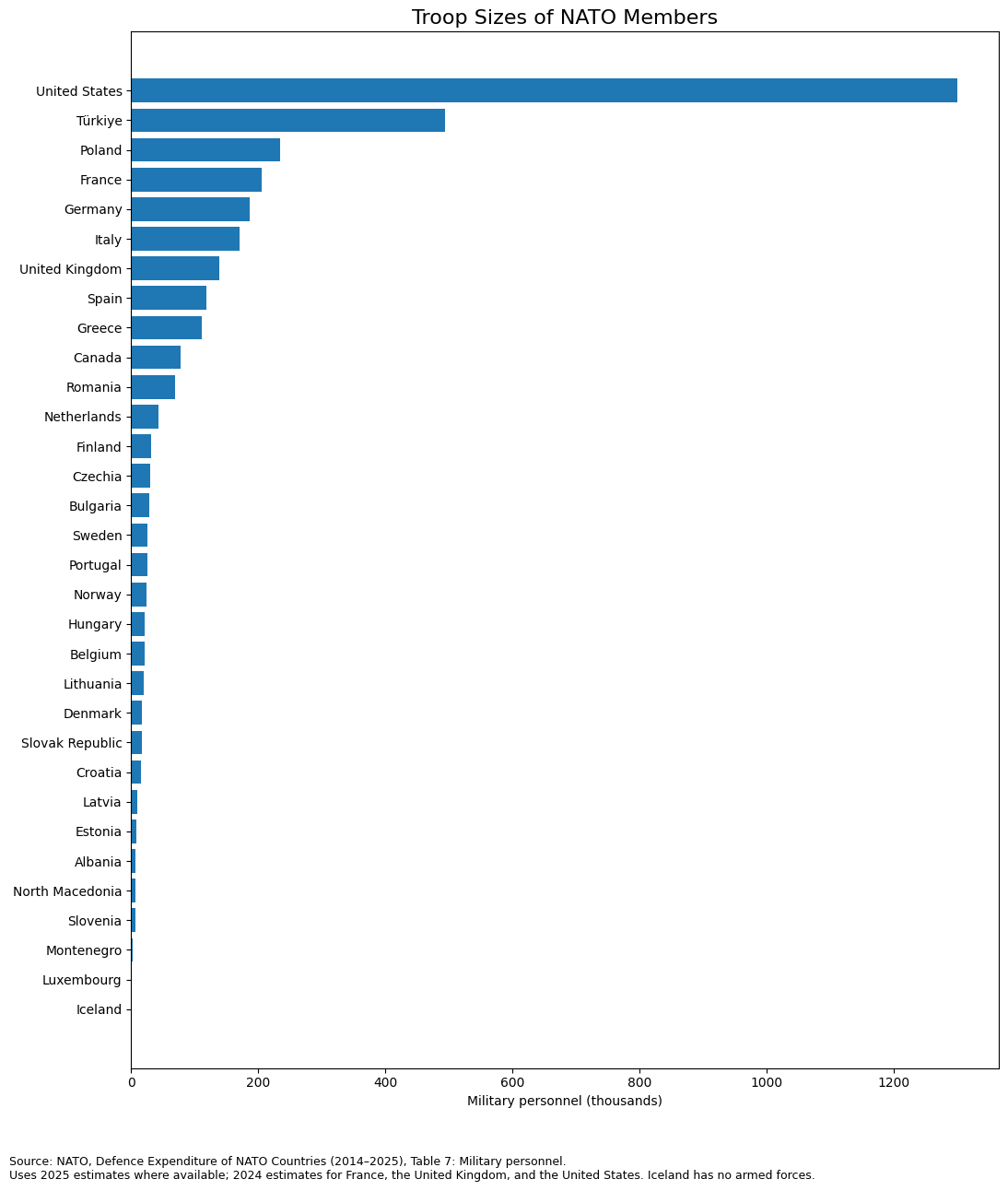
In February, Trump’s under secretary of defense for policy, Elbridge Colby, gave this shift a name: NATO 3.0. In that new version of the alliance, Europe would not only pay more. They would also assume primary responsibility for the conventional defense of the continent—meaning the troops and weapons needed to deter or fight a land war in Europe. The problem is, they don’t have the numbers.
In May, following criticism that German Chancellor Friedrich Merz leveled against Trump about the Iran war, Trump announced that the US would reduce 5,000 troops based in Germany. On July 2, the WSJ reported that Pete Hegseth planned to announce additional cuts to US forces in Europe at a NATO meeting last month. Instead, he said that the US would “conduct a review of its force posture in Europe that could last as long as six months.”
So NATO 3.0 raises an obvious question: if Europe is expected to carry more of the burden, will it also get more of the authority?
Gesine Weber makes that point, asking if the shift from the US to Europe will also mean a shift of leadership and direction. Right now the Supreme Commander of the Allied Forces (SACEUR) is an American. The NYT points out that “the continent has competent generals, but no clear European command, since each ultimately reports to their own country’s political masters.” Over at the European Council on Foreign Relations, Jana Puglierin, Marta Prochwicz Jazowska, and Rafael Loss note that the Europeans can lead NATO without the US—in their own way. Poland’s foreign minister, Radek Sikorski, quipped that “We don’t even have to be as good as the United States. We just have to be better than Putin.”
Another question NATO 3.0 brings up is how the alliance, where trust is at an all-time low, would share intelligence. At the end of last year, the UK and the Netherlands scaled back their intelligence sharing with Washington, as the Trump administration targeted boats in the Caribbean. In March 2025, the US briefly stopped sharing intelligence with Ukraine.
