
Remembering Yanar Mohammed
The Iraqi feminist and human rights activist was gunned down in Baghdad
It’s me again. I know I’ve been sliding into your inboxes a lot lately. There’s a lot going on. I’m here on a Tuesday to tell you about Yanar Mohammed—primarily because no other major US or Canadian paper has not.
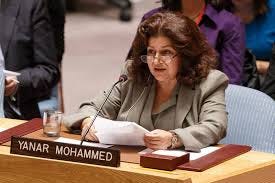
On March 2, Mohammed was shot and killed outside her home in Baghdad. She was 65. It is unclear who did it. Yet, given the work she did defending women’s rights, the motives are not difficult to imagine. Mohammed was a founder of the Organization for Women’s Freedom in Iraq (OWFI), an organization dedicated to protecting women from abuse, trafficking, and violence.
She had returned to Iraq after the US invasion in 2003, from her home in Toronto. Mohammed had fled to the Canadian city in 1993. Her mother was outraged. She wrote a letter explaining that she did to prevent “Iraq going back to the times of my grandmother,” where the “politics of the New World Order” were handing power over to men, who would leave millions of women “vulnerable to distressing and devastating lives.” That if she or other women “do not work against it, the dark ages are around and women are the first victims.”
Immediately upon her return, Mohammed helped found OWFI and the safe houses that provided shelter to women in need. The New Arab reports that she also co-founded and edited Al-Mousawat (“Equality”), a newspaper committed to feminist perspectives in Iraq.
Mohammed spent the next two decades challenging religious and legal norms that disenfranchise women. Middle East Eye reports that in “recent years, she had been at the forefront of the campaign against a new law enshrining Shia religious jurisprudence in family law, which would give husbands automatic custody over children and a unilateral right to divorce without the wife’s consent.” The law passed, but was stripped of a provision that would have reduced the minimum age of marriage for girls to nine. NINE YEARS OLD.
She said the “government was trying to push the ‘archaic’ laws as a means of distracting from its own failings, including ‘huge corruption.’”
Mohammed took her case to the UN as well. A 2015 NYT profile notes a visit she made to the UN Security Council where she chastised assembled diplomats for excluding women and minorities in Iraq’s rebuilding. When she raised her concerns about gender equality with American and British diplomats, she was told to “take it up with tribal leaders.”
And she did. As a result, Mohammed lived under constant threat. According to +964, in 2004, the Iraqi Islamist group Jaish al-Sahaba “sent her two explicit threats linked directly to her gender equality work.” The Iraqi government threatened to shut down OWFI and accused her of human trafficking and forced her to leave the country. Yet, as Equality Fund notes, she never stepped back from frontline work—neither in shelter operations nor in outspoken advocacy.
Her assassination is therefore not an isolated act of violence, but, as MADRE points out in a remembrance, a stark reminder of how human rights defenders, particularly feminist leaders, remain vulnerable to violence.
Despite becoming a victim of violence, no major US or Canadian outlet has acknowledged Yanar Mohammed’s murder. That includes her hometown power, The Toronto Star, which last profiled her in 2013 for the “life” section—the section where women are often relegated to. In fact, the only voices talking about her death are women, activists, and feminist networks—proof that gender justice is grossly ignored not only in mainstream news, but in the mainstream—or what we should call the “manstream.”
“But there is a war in Iran” is hardly an excuse—but the very reason every outlet should cover Mohammed’s assassination. She was gunned down for working to bring about progress, the very thing that democracy hinges on. If you care about democracy, then you need to care about the individuals working to build and preserve it.
Yanar Mohammed deserves to be honored. And we deserve a media with a wider lens that enables us to do so. This is not merely a “women’s” story. Especially as we watch another war unfold; a war that has already taken thousands of lives, including 175 school girls in Minab, in southern Iran—we need to put in perspective who—and what—we are losing.—Elmira
Editorial Team
Elmira Bayrasli - Editor-in-Chief


A really lovely tribute, Elmira. Thank you for uplifting Yanar Mohammed and the impact she made.