
Hope you’re having a good summer. Can’t believe it’s August. Yes, all I want to do is read books…I’ll have a post on what I’ve been reading.
Thanks to everyone who subscribes and supports this newsletter. It’s $8 per month or $80 or $150 per year, with different offerings, including writing office hours and access to expert conversations. Also, I link to gift articles you’d otherwise have to pay for!
I’m holding office hours on Monday, August 17 at 12pm ET. We’ll look at “what an op-ed is” in my effort to get more women bylined. I’ve got a few editors from op-ed pages lined up to speak soon. —Elmira
This Week in the World.....

On my radar...
While the Strait of Hormuz continues to dominate the headlines, it’s important to remember that 81 years ago, the US dropped the first and only nuclear bomb, first on Hiroshima on August 6 and then on Nagasaki on August 8. Nearly 250,000 died by the end of 1945, with so many more suffering afterwards. Important, because we’re moving into an era where the threat of nuclear confrontation is on the rise—and, as Rose Gottemoeller notes, the deterrence that we’ve long observed is on the decline. That is, with the rise of drones, non-nuclear powers are increasingly willing and able to attack nuclear powers. Take Ukraine with Russia—and, to a certain extent, Iran with the US. (Foreign Affairs)
So, does it make sense for countries to gain nuclear capabilities? Saudi Arabia seems to think so. And while Trump’s last minute demand that the Gulf monarchy sign onto the Abraham Accords and normalize relations with Israel in order for the US to assist it with nuclear development seems to have complicated the deal, Sharon Squassoni says the deal is not dead. (Bulletin of the Atomic Scientists)
From where I sit it doesn’t make sense for countries to have any nuclear weapons, it merely puts us all in jeopardy.
Hormuz
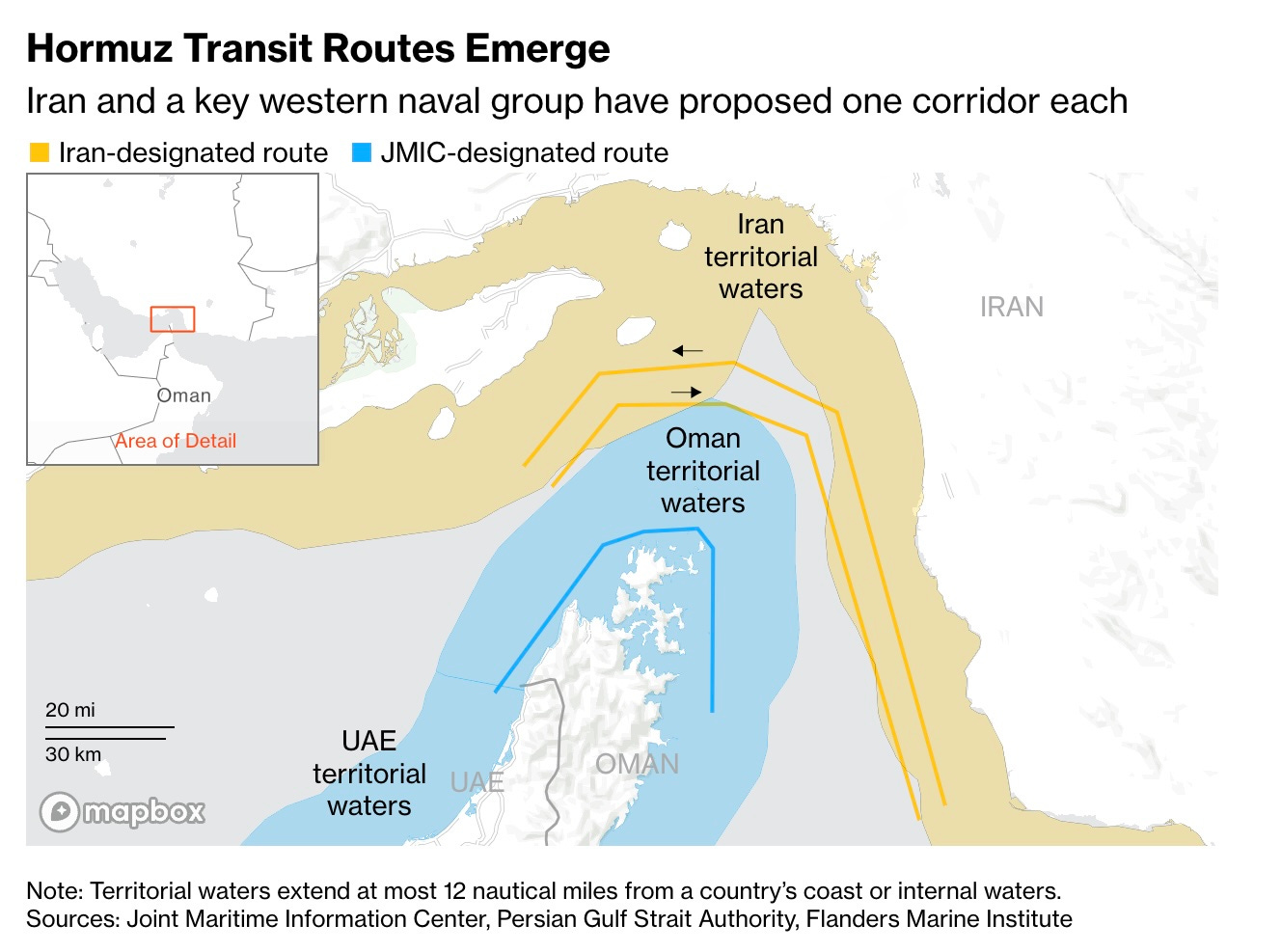
As of Friday morning, August 7, Iran and Oman are still working out an agreement between them on managing the Strait of Hormuz. That’s right, the US is not at the table. In fact, the US is on the menu. Over at Bloomberg, Sara Gharaibeh, Skylar Woodhouse, Sonya Dymova, and Eltaf Hajafizada report that “some Iranian lawmakers said they would seek to bar American and Israeli ships from the waterway as part of the deal.” (Bloomberg) 🎁🔗
What would the arrangement look like? Parisa Hafezi and Timour Azhari say that incoming ships would pass near Iran. Ships exiting would pass closer to Oman. What’s holding the deal up is money—and how much to charge. Iran wants to levy between 5 and 7 percent on ships. Oman is looking at 3 percent. The US doesn’t want any tolls. (Reuters)
Yeah, keep your seatbelt on folks. This ride ain’t over.
Ukraine
Meanwhile, over in Europe, because Ukraine has run out of Patriot defense interceptors—and, more importantly, the US is running low on them—it hasn’t been able to prevent incoming Russian missiles. The Institute for the Study of War warned that Russia may bring the war to NATO’s European members by using seized Ukrainian drones in a false flag operation. (ISW)
This morning, August 7, Lara Seligman and Yoko Kubota at the WSJ have a piece that says that US intelligence says that Russia “could try to test NATO’s resolve with a limited assault,” given the US shortfall on munitions. (WSJ) 🎁🔗
On July 25, Ukraine hit an Iranian ship in the Caspian Sea. While the incident did not escalate, it does show how Russia’s war on Ukraine and the US war on Iran are becoming intertwined, writes Katherine Spencer. She notes that Moscow and Tehran have been exchanging weapons and intelligence. (Atlantic Council)
Colombia
In Colombia, Abelardo de la Espriella takes office today, August 7. And the inauguration will be something. To start, it won’t include the outgoing president, Gustavo Petro, who refuses to recognize Espriella’s victory. Nor will it include a number of other past leaders. It also won’t be in the country’s capital, Bogotá, but in Cali. Espriella had originally wanted to be sworn in at a military installation, in a hat tip to his “strongman” vibe. Instead, he’s signaling that he’ll be a leader that will decentralize power to the different regions in Colombia.
No doubt there will be analysis on how Espriella’s new approach will work out. In the meantime, Juanita León and Edgar Quintero Herrera reflect on outgoing president Petro’s tenure. They note that while the “collapse” that his critics feared never came to pass, he also failed to deliver the sweeping transformation he promised. (La Silla Vacía)
Ceuta
The fallout from last week’s migrant run on Ceuta continues. The numbers who attempted to seek asylum have risen to 70,000. The number of dead stands at about 100. And while most migrants have left the Spanish enclave, reverberations continue throughout Europe. Katherine Butler on why Spain’s European allies turned on the country and how the hard right has set the agenda on migration. (Guardian)
Here’s my take on the episode, which I think is more about Europe’s reaction to it and the signals it sends to Turkey’s Erdogan and Russia’s Putin.

US
Join my brainstorm. As the Trump administration looks for ways out of the war it started in Iran, the US military is taking suggestions for “new creative and unconventional ways to pressure and punish Iran.” Lt. Col. Rachel VanLandingham says that’s an admission of failure. (MS Now)
How about forcing them to be Mets fans?
Also, the NYT dropped a story last night that Trump was resurrecting his efforts to stop birthright citizenship. 🖕
Africa
The Centers for Disease Control reports that 3973 people are confirmed to have contracted the virus, with 1801 confirmed deaths as of August 6. (CDC)
Cameroon’s president, Paul Biya, is at 93 the world’s oldest head of state. And there is widespread concern about his health. He’s been out of the country since June 7. Yet, on Monday, he “reshuffled” his military—to show he’s still in charge or to protect him? (Reuters)
Remember when Donald Trump said that there is a “white genocide” being committed in South Africa? His reference point was a law that allows the government to seize private land, if it deems that it is in the public interest. One of South Africa’s opposition parties has challenged that law. Tara Roos has been following the case that opened this week. (Business Day)
Asia
Those “cockroach” protests in India seem to have had a second victory against Narendra Modi this week. On Monday, Modi’s Hindu nationalist party, the Bharatiya Janata Party (BJP), lost a seat it has held for three decades, in the eastern state of Bihar. Mira Shah Gulati put together this helpful explainer recently.

What do India’s Gen Z protests mean for Modi? Manisha Pande reflects, noting that while Modi may continue to wield a lot of power, education and employment are issues that unite India’s citizens regardless of background. (New Yorker)
This week, Nauru, population 12,000, became Naoero.
Last Friday, July 31, the US sold Euros to buy Japanese Yen and prop up the currency—not so much to bail Japan, a US-ally, out, but to protect US trade and the US dollar, writes Rebecca Patterson. (CFR)
Here’s something I learned this week: Japan is the largest holder of US debt, holding $1.19 trillion in US securities.
Myanmar’s military overthrew Aung San Suu Kyi as the elected leader and overtook the government in April 2021. Most of the country’s neighbors condemned the act and put together a “five-point plan” to restore civilian rule—a plan that Myanmar’s generals signed on to. Five years later, little progress has been made to implement it. Moe Thuzar on how Myanmar’s generals now reject it. (Lowy Institute)
In fact, Myanmar’s generals are now seeking international legitimacy. This week, the country’s top general traveled to Thailand for an official visit. (AP)
This month marks five years since the US withdrew from Afghanistan and the Taliban took back control of the government. Things have been horrific for women and girls in the country, both because of the Taliban’s policies but also because of Afghanistan’s global isolation. Annie Pforzheimer, who served as the Deputy Chief of Mission at the US Embassy in Kabul, has been devoted to this topic. She joined Lisa Curtis in drafting this report that stresses the importance of Afghans to engage with the Taliban government and find a way forward for the country on the world stage. (CNAS)
Americas
Things are not going well between the US and Brazil. Brazil has been dragging its feet on approving the US ambassador. In the past week, the country denied visas to two State Department officials it says would “cast doubt” on the upcoming October elections. In what appears to be a tit-for-tat, the Trump administration has revoked the sitting Brazilian ambassador to the US’s visa. Sofia Aguiar, Mariana Andrade, and Ruan Amorim report that Brazil will keep Maria Luiza Ribeiro Viotti as its top envoy in Washington. (Valor International)
Meanwhile, Brazil and Argentina have downgraded diplomatic relations, pulling their respective ambassadors and leaving the second-in-command in charge.
Cuba’s electrical grid collapsed twice at the beginning of this week, following several nationwide failures in July. That’s largely a result of the embargo the Trump administration has imposed on the island nation, preventing it from importing oil, hoping it forces the regime to collapse. The NYT broke a story that says that the CIA has put together a “task force.” Jessica Corbett on Team Trump’s effort to topple Cuba’s regime. (Common Dreams)
In Peru, Keiko Fujimori has taken office. And she’s making clear signals to the Trump administration that they can depend on her to be pro-US rather than China, with the appointment of long time envoy to the US Carlos Espá as Peru’s new foreign minister. Carla Samon Ros has more. (Bloomberg)
Middle East
In Gaza, Hamas said it would disarm, according to the ceasefire brokered back in October. That puts Benjamin Netanyahu in the position of having to withdraw Israeli Defense Forces from the territory—something he’s loath to do before the October elections. And indeed, he said that this week. That, Julie Norman says, is exactly what Hamas wants. (Chatham House)
UNICEF reports that more than 300 children have been killed in Gaza since the October ceasefire. (Al Jazeera)
Meanwhile, over in Rome, Israel and Lebanon are not making much progress on getting Israel to pull out of southern Lebanon.
Turkey’s parliament will consider legislation that lays out a framework for former militants with the Kurdistan Workers Party (PKK), a terrorist group, to avoid prosecution, provide legal protections, and suspend prison sentences of those who have been convicted. It’s part of the government’s efforts to achieve peace with the PKK. Eren Keskin says that as it currently stands, that will be hard, since the state is not dealing with the PKK on an equal footing. That indicates that it is not interested in resolving the Kurdish question. (ANF News)
For what it’s worth, Turkey’s “new” party, literally called New Party, opposes this bill.
Europe
An explosive-laden drone was discovered at the Leipzig Airport in Germany this week. As Nette Nöstlinger points out, that airport serves as a strategic hub for NATO, including military transports to Ukraine. Yeah, so it’s no surprise that Germany’s interior minister suspects a “foreign” state to be behind it, though he stopped short of naming Russia. (Politico)
Under the Radar
Well, the big talk in Europe last week was FIFA president Gianni Infantino’s bid to bring in private investors, or, rather, sell off stakes in its major competitions. The European football federation, aka UEFA, held an emergency call to respond. As Megan Feringa points out, it was a woman who proposed to boycott FIFA and another woman to back her. And that forced Infantino, who couldn’t be more appropriately named, so stand down from his greedy proposal. (The Athletic)
Would love to know what you think, or what I got wrong or left out— here’s my email.
Opportunities
The Wilson Center is taking applications for the 2027-2028 Research Fellowship.
Two positions at the Chicago Council on Global Affairs: One as a Program Officer for the Global Leaderships Program and the other Senior Writer/Editor, Executive & Editorial Communications.
The Global Impact Investing Network is on the hunt for a CEO
CFR is hiring for a Senior Writer/Editor.
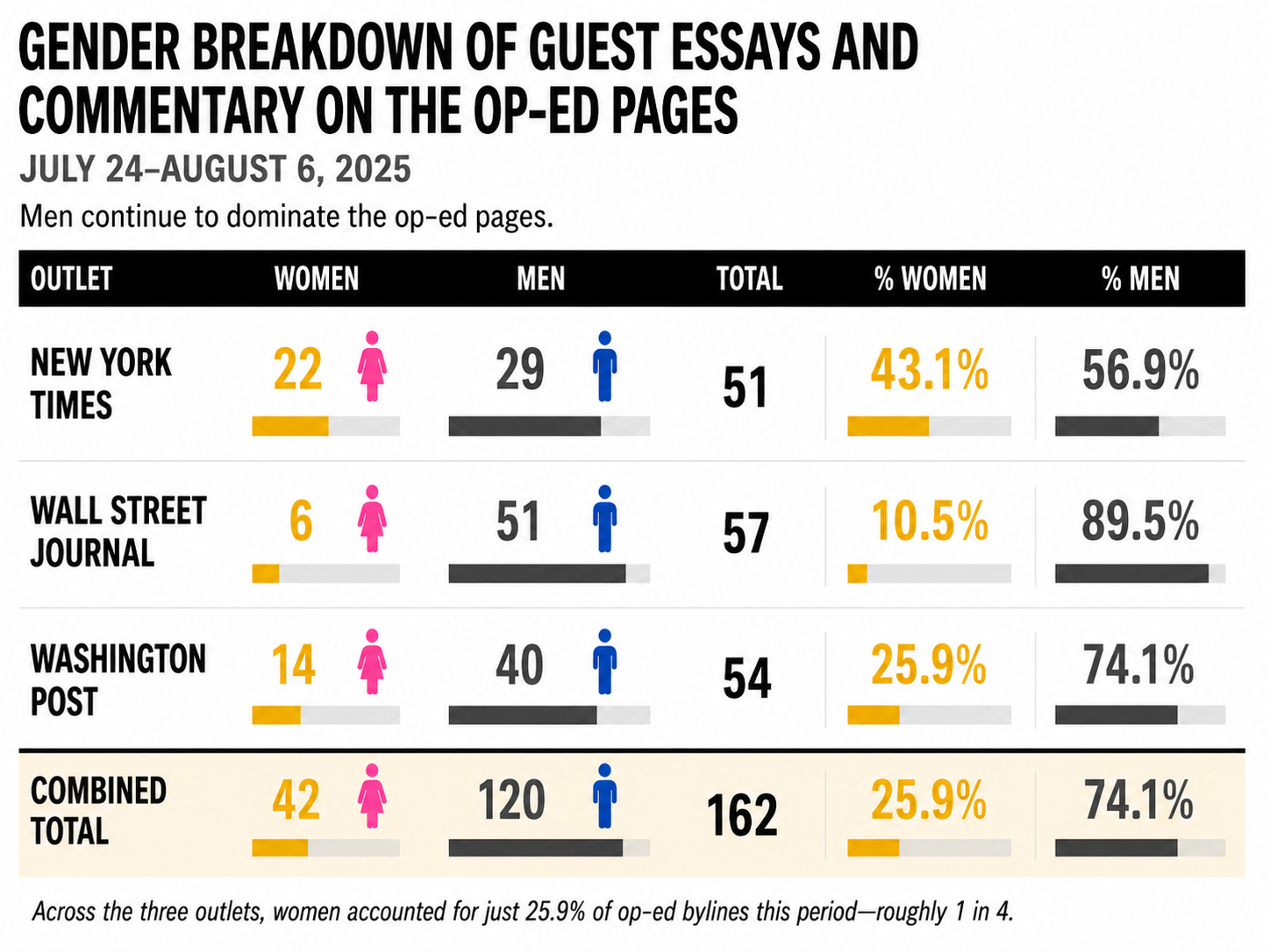
Gender Tracker
Progress over at the NYT over the past two weeks! I was thrilled to see so many female bylines. Clearly, they’re paying attention to the Gender Tracker!