This Week in the World: May 29
Here's the roundup of what's happening in the world, including a possible agreement between the US-Iran, Colombia votes, Pope Leo's encyclical, and progress on the Gender Tracker. 🙌

Go Knicks. 🙌 Makes me forget about the Mets.
You should have received my regular 7:30am ET “book” post.

Tried to make this coherent, but haven’t slept, so apologies for any typos, errors, or things left out. I didn’t leave out the strikes in Ukraine—just didn’t find any new analysis on it. I am impressed that Keir Starmer has survived in the UK. Nothing new on Cuba….
Would love to know what you think, or what I got wrong or left out— here’s my email.
This Week in the World.....

On my radar...
Iran
Will they actually reach a deal? As of Friday morning, May 29, the US and Iran seem to have reached a tentative agreement to extend the “ceasefire” for 60-days, reopen the Strait of Hormuz, and the US would start to lift sanctions on Iran. (I’m not sure what ceasefire actually means anymore, since both sides continue to strike one another.) Word is that everyone is waiting for Trump to sign off on the agreement. He’s come close before, only to renege at the last minute—like Lucy pulling the football away from Charlie Brown.

A sticking point: Iran and its enriched uranium. Trump officials have indicated that Iran has said it would give up the stockpile. But AP reports that Iran has not agreed to that, leaving it to be negotiated later. If it does somehow agree to it, it has signaled that it would do so to Russia or China, which Trump does not like.
The only thing worth saying about why neither Trump or Iran’s Islamic rulers can reach an agreement is—Trump is loath to accept the fact that this war gave Iran leverage and put the US at a disadvantage in the region. And Iran knows that.
My eyes are still in the Kash Patel popout position 😳 after Trump suggested that Qatar, Saudi Arabia, Jordan, Turkey, Egypt, and Pakistan join the Abraham Accords as part of any deal with Iran—normalizing relations with Israel. As Nahal Toosi notes, they all scoffed at the idea. (Politico)
I know I shouldn’t, but I honestly find it stunning that Trump throws out these trial balloons without vetting them with people who actually know how those countries would react.
On the impending “deal,” Mona Yacoubian and Will Todman say that the Gulf monarchies are approaching it with “relief and trepidation.” (CSIS)
Oman, the country that had been the mediator between the US and Iran, has riled Team Trump. Last week, I noted that it was in talks with Iran on collaborating on a toll system in the Strait of Hormuz. This week, Trump threatened to “blow them up” if they went through with it. Federica Marsi has more. (Al Jazeera)
In good news, the Internet is back on in Iran—at least partially. The country had gone without it since the start of the war back on February 28. Iran Wire reports that it hasn’t “returned to previous standards.” (Iran Wire)
Colombia
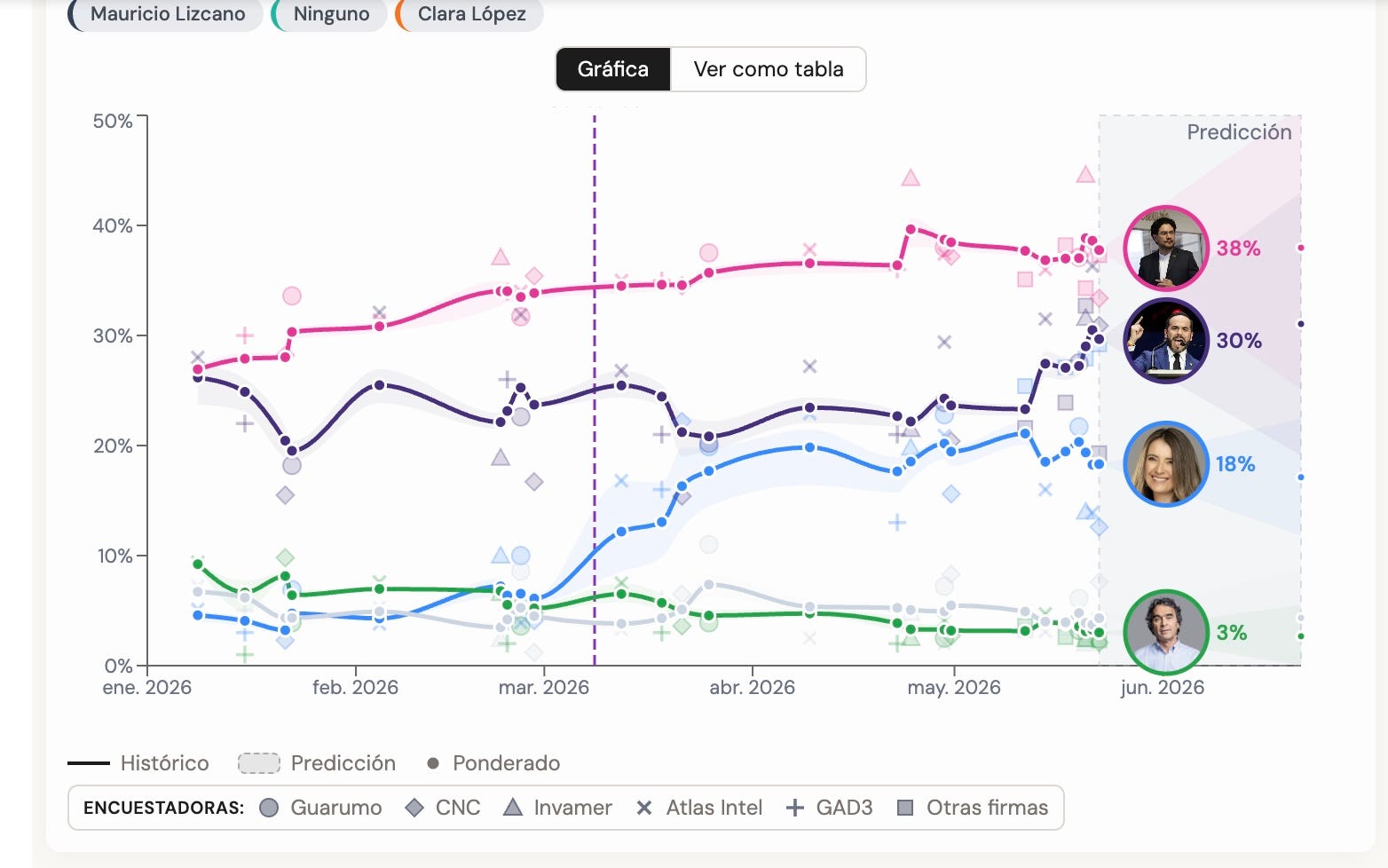
Colombians go to the polls this weekend to vote in general elections. There are 14 candidates on the ballot. To win, a candidate needs an absolute majority, 50 percent of the vote. If no one candidate gets 50 percent, the top two candidates go to a runoff on June 21. Polymarket is all over the place on this.
The top candidates are: leftist Iván Cepeda (polling at 38 percent), right wing Abelardo de la Espriella (polling at 30 percent), and Paloma Valencia, who is also from the right. James Bosworth had her as a favorite a few months ago, but now she’s polling at 18 percent. Bosworth notes that she ran a weak campaign and failed to take on Abelardo, who has had an impressive social media game but lacks organization. But polls are polls, so we’ll see what Colombians decide on Sunday.
Lucía Cholakian Herrera notes that “these elections will most likely define which vision of the right will face Cepeda in the runoff, but the outcome will also speak to the path Colombians choose to confront the country’s chronic problems: insecurity, inequality, corruption and political fragmentation.” (Courthouse News)
Pope’s Encyclical
This week I learned what an encyclical is. You are a better person than me if you already knew. Or Catholic. Entitled, Magnifica Humanitas—Magnificent Humanity—Pope Leo, with Anthropic co-founder Chris Olah at his side, spoke about AI. I didn’t have a lot of time this week to dig deep into it. But, as Elena Betti points out, this wasn’t resistance to the technology but an effort to remind the puppet masters behind it that it will impact humanity. Sounds reasonable to me. (Wired)
US
Given how much he spends at Trump’s side, it is remarkable when Marco Rubio does take a foreign trip. This week the US secretary of state traveled to India, for a meeting of the Quad—the US, India, Australia, and Japan. At a moment when Trump has turned his back on alliances, the fact that Rubio turned up and emphasized Washington’s “deep commitment” to the partnership is something. Elizabeth Threlkeld, Akriti Vasudeva Kalyankar and Kelly Grieco reflect on the alliance, which many have (mistakenly) dismissed as irrelevant. (Stimson Center)
This week, the US blocked Russian and Iranian diplomats from traveling to the UN, for a debate in the Security Council. Damilola Banjo has more. (PassBlue)
And while this doesn’t belong in the US section, China is also putting restrictions on movement of its own citizens. The CCP now demands that anyone working for the country’s top tech firms, such as Deepseek, needs permission to travel abroad. (Bloomberg)
Stalling mobility is very concerning and looks to be something that both the US and China will do in the future.
Africa
Relief Web reports that as of May 27 there are over 900 suspected cases of Ebola virus and about 225 deaths.
Central Africa’s Ebola outbreak is exposing the costs of the United States’ withdrawal from the World Health Organization and broader cuts to global public health, writes Katherine Wu. Turns out “America First” actually opens Americans, along with everyone else, to vulnerability. (The Atlantic)
In Senegal, President Bassirou Diomaye Faye fired his prime minister, Ousmane Sonko last Friday. As Colleen Goko notes, at issue is an IMF loan, to help address Senegal’s debt crisis. But in a soap opera plot twist, lawmakers elected Sonko as parliamentary president—so he’ll still be a thorn on the president’s side. (Reuters)
The Americas
Flávio Nantes Bolsonaro, son of former Brazilian president and current convict Jair, called on Trump in the White House this week. He’s the leading candidate to go up against the leftist incumbent Lula. The election is on October 4. Bolsonaro, along with many on the right in Brazil, have been pushing for the US to designate drug gangs as terrorist groups. On Thursday, the Trump administration did just that. Last month, Thallita Lima warned of the dangers of doing that, namely that it redefines the threat—and, thereby, the response, morphing it from a domestic matter into a geopolitical one. (Latino America 21)
As mentioned last week, protests have rocked Bolivia. Gabriela Keseberg Dávalos says that while there is a tendency to dismiss the anger at the country’s president, Rodrigo Paz, as right-left polarization, it’s actually the very constituents that enabled Paz to come to power that are upset. (Americas Quarterly)
Middle East
On the shake up of Turkey’s opposition party, the People’s Republic Party (CHP), Ezgi Başaran says that the country is transitioning out of competitive authoritarianism into “straight, not stirred authoritarianism.” (Angle, Anchor, and Voice)

Europe
The WSJ ran a story this week on how Estonia is preparing for a possible Russian invasion. I suppose if I lived next door to Russia, I’d do the same. But what are the actual odds that will happen? Iida-Mai Einmaa reports that Estonian experts, Russia “doesn’t have the strength to escalate.” (ERR)
And in Spain, the left is dealing with multiple corruption scandals. Last week, Spanish officials opened a probe on former Prime Minister José Luis Rodríguez Zapatero on “influence peddling and other offences” linked to a bailout of a Venezuela-linked airline. Meanwhile, the current prime minister, Pedro Sánchez, is grappling with accusations against his brother and wife. Inés Fernández-Pontes on the growing pressure on the current government. (Euractiv)
Under the Radar
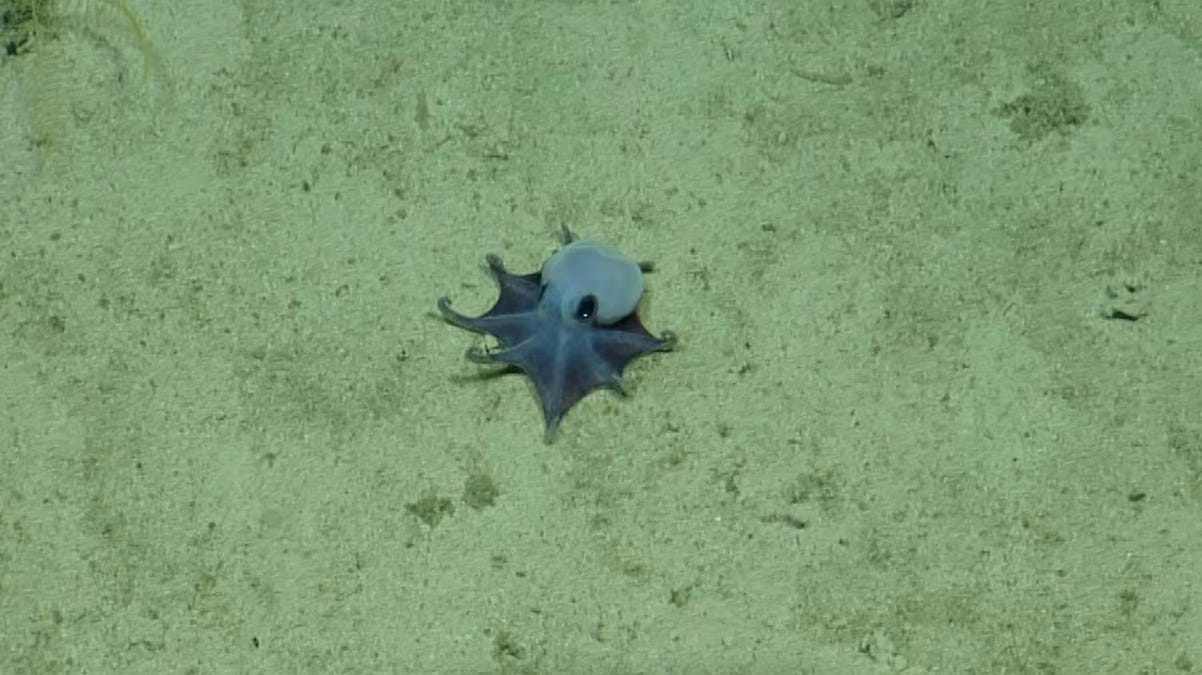
Sometimes I wish I had studied science. Maybe then I could have been a part of the team that discovered this new species of octopus near the Galapagos—that looks like a “plush toy,” as Avni Trivedi notes. (CNN)
The Gender Tracker
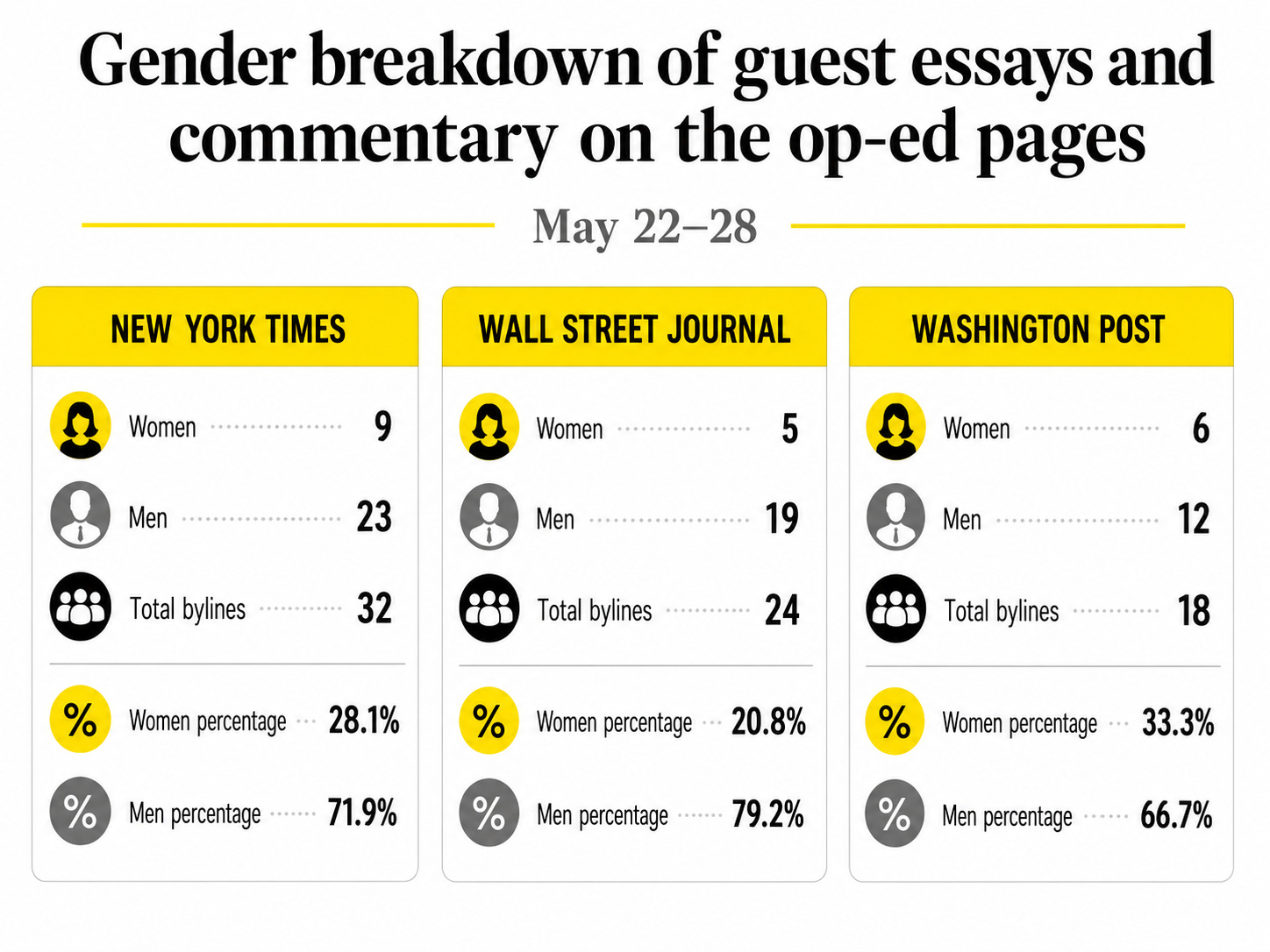
We have improvement people! I feel like I should take credit for it. And maybe I will. The numbers are up across the board, though when women are writing, they’re still pigeonholed into pieces on health or arts and culture. And the NYT, in particular, taps the same female voices. There are a number of pieces this week by Shira Efron in the NYT and Karen Elliot House in the Washington Post on what’s happening in the Middle East. I’m glad to see this—and will continue to keep count of what’s happening on the op-ed page.