

Peace In...Peace Out...
Trump's Board of Peace meets next week. What is it and will it work? Also, Japan's Sanae Takaichi wins big, Bangladesh has a new leader—will the UK get one too?

Happy Valentine’s Day! 💖 And Happy Lunar New Year - Year of the Horse… 🐎 Fire horse to be exact…🔥
Poll results: 67% of you said that Bad Bunny would dominate this week’s headlines, followed by Iran at 33%. Y’all are pretty smart cookies. And that half-time show was 💃🏻🕺🏻 Here is my short take on the performance.
Sticking with the new format for the time being, with my column at the end. Would love to hear what you think about this new configuration. Just hit reply.
This Week in the World.....

On our radar...
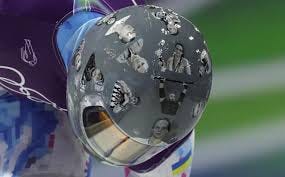
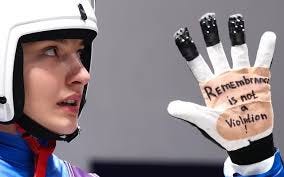
The International Olympic Committee disqualified Ukraine’s Vladyslav Heraskevych from competing in something called skeleton, where athletes are on sleds face down 😳, deeming his helmet, which displayed images of Ukrainian athletes who have died in Russia’s war of aggression, as “political speech.” To which his fellow Ukrainian teammates responded:
Munich Security Conference
“Davos with guns” kicks off in Munich today—for the annual security conference this weekend. JD Vance raised eyebrows last year when he chastised Europeans, accusing them of censorship. Trump’s recent play for the US to take over Greenland further widened the transatlantic drift. But, as Laura Kayali, Felicia Schwartz, and Paul McLeary note, it isn’t dead. No doubt the fact that Vance is skipping it is a huge relief. Can Marco Rubio repair ties? (Politico)
The JD effect: The ban on Germany’s far-right party, the AfD, on attending was lifted. 😐
Japan elections
Sanae Takaichi’s gamble paid off—big time. Last Sunday, Japanese voters gave her Liberal Democratic Party (LDP) a supermajority with 316 seats out of 465 in the Diet, Japan’s parliament. That was entirely because of Takaichi, writes Shihoko Goto. She won over young voters and her hardline nationalism, particularly against China, showed that voters are looking for strong leadership. Will that enable her to push through a reform of Japan’s 1947 constitution, particularly Article 9—aka the “peace clause”—in which Japan renounces the use of force and war? (FPRI)
Dead Man at 10 Downing?
In the UK, Prime Minister Keir Starmer is resisting calls to step down, in the face of revelations that the man he appointed to be the UK ambassador to the US, Peter Mandelson passed along confidential information to convicted sex offender Jeffrey Epstein. Though he “sacked” Mandelson last September, Brits are unhappy with how he’s handled promised reforms, particularly in reviving public services. The Economist notes that Starmer is the “most unpopular” PM, but doesn’t seem to think he’ll be ousted in the immediate future. That’s largely because there’s no consensus on a replacement. But it’s hard to see how he survives for the next three years….
Zoë Grünewald notes that the Labour party’s restraint shows that it doesn’t want a civil war. But what it has to do is reconsider who the party is and how they move forward. (The Lead)
Netanyahu Goes to Washington
Israeli Prime Minister Benjamin Netanyahu made his 7th visit to see Donald Trump, ranking him at the top of the White House foreign visitor list. (Ukraine’s Zelensky comes in 2nd). It was a meeting originally scheduled for February 18, a day before Trump hosts the first “Board of Peace” meeting in Washington. So why speed up the timeline? US indirect talks with Iran. The Israeli PM is eager to get rid of the Islamic regime—and claim success for it. Tal Shalev notes that Netanyahu is eager to do this because he knows he will fail to pass a budget by March 31. If that happens, parliament dissolves and elections move up from October to June. (CNN)
Oh, and on Iran, Trump told Netanyahu that he is pushing forward talks with Tehran. Sorry, Bibi.
Iran
How are those talks going? Going, though Trump says he’s considering deploying a second aircraft carrier to the Gulf. Despite the US military build up, Trump seems to have backed down from striking Iran. Nancy Youssef and Vivian Salama note that’s because there aren’t clear targets or a goal: what does the White House want to achieve through strikes? (See last week’s Interruptrr). They also point out that because regional allies, particularly Saudi Arabia, Qatar, and UAE are against it, which makes it unlikely the US could conduct an offensive without real risks to US forces. YET, the more the US delays, the more Iran is able to prepare. (The Atlantic) 🎁 article
Meanwhile, Iran celebrated the 47th anniversary of the Islamic Revolution on February 11.
Bangladesh elections
Bangladesh held elections on Thursday—the first after the first “Gen Z” protests in 2024 ousted Prime Minister Sheikh Hasina. It looks like Tarique Rahman who heads the Bangladesh Nationalist Party is poised to win. He is the son of a late former prime minister, Khaleda Zia—the country’s first female PM (elected in 1991)—and former President Ziaur Rahman (who was assassinated 1981). Karishma Vaswani notes that his job will be to balance relations between India and China, Bangladesh’s big power neighbors. (Bloomberg) 🎁 article
Elections in Ukraine?
February 24 will mark the 4th anniversary of Russia’s invasion of Ukraine. The FT reported that Ukrainian president, Volodymyr Zelensky will use the occasion to announce plans to hold an election in the spring—something he has resisted—along with a referendum on a peace deal. While that deal has yet to be worked out, Trump has been leaning on Zelensky to hold elections, namely before the summer and the start of the midterm election cycle. Tetyana Malyarenko and Stefan Wolff say that this push will not lead to lasting peace, though it may buy Zelensky time. (The Conversation)
US
The US will no longer recognize the harmful effects of greenhouse gases. Marianne Lavelle looks at what happens next. (Inside Climate News)
Africa
Watch: On the Horn of Africa, tensions are rising between Ethiopia and Eritrea. This week, Ethiopia accused Eritrea of amassing troops on Ethiopian soil. Ethiopia has previously accused Eritrea of supporting insurgents in Ethiopia. Palki Sharma takes a look at recent events. (FirstPost)
Asia
In Hong Kong, newspaper publisher Jimmy Lai was sentenced to 20 years in prison. At 78, that would mean he’d be 98 when he was released. But, releasing Lai isn’t something the Chinese Communist Party (CCP) is thinking about, though it should be, writes Melissa Henneberger. If he dies in custody, he’ll end up a martyr, much like Sir Thomas More. (Real Clear Politics)
Those elections I mentioned last week in Thailand. Well, the conservative, pro-monarchy party, Bhumjaithai, came out on top, managing to eke out a win from the progressives. That means incumbent Prime Minister Anutin Charnvirakul will stay in power, though he will need to form a coalition. Sana Khan explains that Thailand’s recent clashes with Cambodia moved voters to opt for the more nationalist candidate. (Modern Diplomacy)
The Americas
In Barbados, Mia Motley was elected for a third term this week. We love Mia Motley.
Earlier this month, Trump announced a 30 percent tariff on any country supplying Cuba with oil. This week, Cuba announced that it was running out of fuel. Air Canada and other international carriers stopped flights to and from the country. Ever since the US operation to seize Nicolás Maduro in Venezuela and then demand that the remaining regime cut off ties with Havana, everyone has speculated whether Cuba’s communist government would fall. The UN has come out to say that the country is headed towards humanitarian collapse, writes Vera Rousseff (Human Rights Research)
Things are not looking good for the Cuban government.
Europe
In Switzerland, voters will go to the polls in June to decide on a right wing proposal to cap the country’s population at 10 million. Yes, this is the genius idea to stop asylum seekers and immigrants. Charlotte Reck has more. (AOL)
Europe’s dependence on the US isn’t merely material, through defense protections. It is psychological, writes Rose Balfour. (Le Monde English)
Opportunities
Book club alert! Lourdes Martin is the author of the Please, Do Tell Substack. For her next book club, she’s selected, The Undocumented Americans by Karla Cornejo Villavicencio. Here are the details. I’ll be there. Join me!
🇺🇦 If you’re in NYC next weekend, February 21-22, head over to the Ukrainian Institute of America on the UES, for a weekend celebrating Ukrainian culture, including Crimean Tatars, who will perform a traditional dance. Experience Ukraine.
The American-Scandinavian Foundation is hiring for a President & CEO and you don’t have to be Scandinavian!
Looking Ahead: The Board of Peace

Next Thursday, February 19, Trump will host the first meeting of the Board of Peace (BoP). This is a body that Trump proposed back in September, as a means to oversee the Gaza ceasefire. In November, the UN Security Council endorsed the board, even though China and Russia abstained from voting—and the UN had no clearly defined role on it.
Since then, the BoP has expanded beyond Gaza—into a broader, independent body that seems to be an alternative, if not rival, to the United Nations. At Davos last month, Trump launched the body with a signing ceremony. Over two dozen countries pledged to pay the $1 billion to be a member. They include the UAE, Saudi Arabia, Egypt, Bahrain, Qatar, Pakistan, Turkey, Morocco, Kosovo, Bulgaria, Hungary, Albania, Argentina, Paraguay, Kazakhstan, Mongolia, Uzbekistan, Indonesia, and Vietnam. Indonesia announced it would send 8,000 troops to Gaza. Israel has said it would sign on but has not done so. Palestine will be represented by a technocratic body, but no elected officials. There are no sub-Saharan African countries represented. Noticeably absent are the majority of EU states and China.
Interestingly, there are a number of billionaires represented on the BoP, along with former UK Prime Minister Tony Blair. That, Ellen Ioanes says, makes it more a board of profit than of peace. (American Prospect)
According to the BoP charter, Donald Trump is “Chairman for Life.” That ties the position to him, rather than the Oval Office. He would select his successor, subject to unanimous consent of BoP members. While decisions are nominally made by majority vote, they require the Chair’s approval, giving him effective veto power. The Chair also determines membership and can revoke invitations. In other words, Trump’s club, Trump’s rules.
The BoP is designed to act quickly, though on what authority and toward what binding end remains unclear. It has no legal power over non-members and cannot compel compliance even among its members. Unlike the UN, whose legitimacy rests on a charter and collective authorization, the BoP is essentially pay-to-play—a way to gain access to Donald Trump. That’s what makes its longevity doubtful.
Though in his second term, normally considered a president’s “lame duck” period, Trump has managed to display strength and leverage. The targeted strikes on Iran’s nuclear facilities in June and the operation to capture Nicolás Maduro in Venezuela last month are case in point. Yet, out of the White House Trump won’t have access to the capabilities that come with the presidency. His successor will—and be the one to grapple with global crises, with an actual diplomatic corps and military that can take action. Without either, it’s hard to see how the BoP has any shelf life.
Kristina Daugirdas and Katerina Linos make the case that efforts to circumvent multilateral bodies like the UN don’t work. They point out that these side efforts have hidden costs and unexpected limitations—and motivate participants to “boomerang back to the very multilateral frameworks that they initially rejected.” (Lawfare)
Certainly, those frameworks will look and feel different after Trump. They already do, particularly in the wake of sweeping rollbacks in US foreign assistance and development spending. Here’s the thing though: vacuums get filled.
China, which has invested heavily in the United Nations system, is working to shaping it from within. At the same time, Beijing will continue deepening its influence through parallel forums such as the Shanghai Cooperation Organization, which it helped found in 2001, along with Russia and other Central Asian sates, and where it sets the terms more directly.
Countries across Africa and the Americas are also recalibrating. The majority remain committed to the UN, where they are focused on pressing for action on climate change, sovereign debt, and other transnational crises that no single state can resolve alone. (The Starling Institute focuses on this). Trump can ignore them, but they don’t have to stand to be ignored. Many of them literally can’t afford to.
It’s no secret that Trump is reshaping the world order. (Since he’s hitting us over the head with it.) The Board of Peace shows that his MO is leverage and personality. That may work in the deal making, real estate world. But global governance is not sustained by force of will alone. It rests on cooperation and shared needs. The United Nations will emerge from this period looking different. It may even be weaker in some respects. Yet it is more likely to last than Trump’s made up alternative—and indeed Trump himself. —Elmira
Editorial Team
Elmira Bayrasli - Editor-in-Chief